
Whoa! Here we go. The browser extension is where most DeFi action happens now. People dump gas fees into trades, sign transactions in a hurry, and expect the wallet to be invisible and perfect. My instinct said something felt off about that assumption for years.
Okay, so check this out—extensions live in a weird middle ground. They’re part app, part browser accessory, and fully exposed to webpages that you didn’t build. That mix makes them tasty targets for attackers who know how to whisper to your UI. Initially I thought only careless users got hit, but then I noticed an exploit chain that targeted extensions themselves, not just user habits.
I’m biased, but this part bugs me: many security guides treat browser wallets like they are hardware wallets with a screen, which they clearly aren’t. On one hand, extensions give great UX and immediate DeFi access. On the other hand, they sit in your browser process, share memory, and can be influenced by malicious scripts when permissions are too broad. Actually, wait—let me rephrase that… permissions are the weak link more than the extension code most of the time.
Short checklist first. Lock down permissions. Use separate profiles for work and for big-value wallets. Reduce exposure to unknown dapps. Those are quick wins. But there are deeper, structural practices too, somethin’ I keep repeating to teams I consult with.
How attacks actually play out — a practical walkthrough
Here’s a realistic scenario. You install a shiny extension because it promises better UX and advanced features. It asks for broad permissions. You click accept. Days later, a compromised website triggers a page script that enumerates available accounts through the extension API. The extension obliges. The attacker then crafts a social-engineered signature request, with text disguised to look routine, and pops the modal. Sound far-fetched? It’s not.
Seriously? Yes. My first impression when I audited that flow was, “Wait, why is the extension showing this much info?” Then I thought through the UX constraints—extensions try to be helpful. They show chain names, balances, token symbols, and that very helpful “Approve” button. On one hand, that helpfulness reduces friction. Though actually, it also increases attack surface by giving attackers more vectors to manipulate decisions.
So what’s the defense? Multiple layers. Don’t rely on one control. Use permission scoping, UI hardening, origin checks, and explicit human confirmations that are context-aware. Also, design your signing dialogs to show transaction intent clearly, including human-readable summaries and risk flags where possible. This is very very important.
My instinct told me early on that small UX details matter. A single confusing button label can be exploited. But system 2 thinking shows the trade-offs: making confirmation dialogs too verbose will drive users to accept them without reading. We need smart friction instead of blunt friction, and that requires metrics and iterative testing.
One neat practice I’ve seen work is “progressive trust.” Start an origin as untrusted and let trust increase based on consistent, verifiable user interactions. That way, risky origins face stricter gating. It sounds like extra work, and yeah, it is—however the payoff in reduced exposure is real.
Practical steps you can take today
First, minimize browser extension permissions. Only allow what you need. Seriously.
Second, separate funds across wallets. Keep a small hot wallet for daily DeFi plays and a cold or hardware-backed wallet for larger holdings. Move funds only when necessary. This reduces the blast radius if something goes sideways.
Third, use a wallet that supports advanced UI defenses like transaction intent parsing, origin binding, and clear nonce indicators. That matters a lot when interacting with complex contracts. A good extension will show the dapp origin clearly, parse the calldata into readable actions, and highlight potentially dangerous operations like ERC-20 approvals for unlimited allowances.
Fourth, get in the habit of verifying contract addresses manually when authorizing big changes, and use block explorers or trusted verifiers where appropriate. It’s tedious, yes—I’m not 100% fond of tedious work either—but tedious checks beat irreversible losses.
Fifth, keep software up to date. Extensions push security patches frequently. I know updates sometimes break a favorite feature (ugh), but install them. They often close subtle IPC or message-passing holes that attackers exploit.
Lastly, consider wallets that split responsibilities. Some modern extensions act as an interface while the cryptographic operations are offloaded to a more isolated process or even a small paired app. That boundary reduces exposure significantly if implemented cleanly.
A note about Rabby and why I recommend trying it
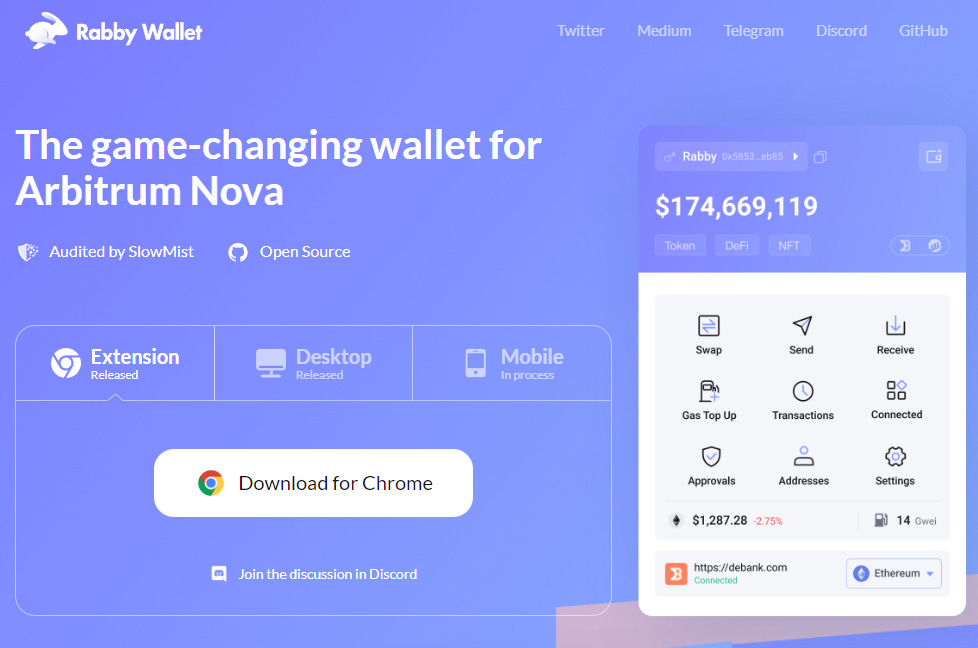
I’ve used several wallets as a daily driver and tested many in security exercises. One that stands out for thoughtful extension design is Rabby. It focuses on transaction clarity, warning signals for risky approvals, and interfaces that reduce accidental signatures. If you want to try it, here’s an easy place to start with a safe installer: rabby wallet download.
Not a paid plug. I’m sharing it because the team behind it iterates on UX for safety, not just bells and whistles. They also support features like per-site permissions and clearer intent parsing, which I value. That said, no wallet is perfect. Use it with the same cautious habits we’ve discussed.
Oh, and by the way… always test any new extension with small amounts first. That’s the simplest heuristic to reduce surprises.
Design recommendations for extension developers
Developers, listen up—this part is for you. Build confirmations that are human-first. Show what will happen in plain English and avoid burying key details behind links or toggles. Provide contextual warnings for known hazardous patterns like “increaseAllowance” or “transferFrom” that don’t fit expected behavior. Also, make it trivial for users to revoke approvals from the UI.
As a product person, I’ve found that adding deliberate micro-delays to critical confirmations reduces accidental clicks without causing user rage. It sounds counterintuitive, but slow friction—small, explained, and reversible—tends to increase safety more than immediate but opaque confirmations.
On a technical level, enforce strict origin policies, sign payloads server-side when appropriate, and validate transaction intent against known typical actions. Use telemetry (with privacy safeguards) to detect anomalous signing patterns and surface them to users.
Common questions
Q: Can a malicious website steal my seed phrase through the extension?
A: No—extensions should never expose your seed phrase to web pages. If an extension asks for your seed phrase within the browser context, that’s a red flag. But attackers can trick you into revealing it through social engineering, so never paste your seed into sites or dialogs. Treat it like cash: visible, valuable, and guarded.
Q: Are hardware wallets always better than extensions?
A: Hardware wallets protect keys from browser compromises, which is a big plus. However, their UX in DeFi flows can be rough. Many users combine both: a hardware-backed wallet for large holdings and an extension for convenience and smaller trades. It depends on your threat model and patience for extra steps.