
Okay, so check this out—I’ve been living in the browser-wallet world for years. Wow! It gets messy fast. My first impression was simple: convenience wins. Seriously? Yes. But then I started noticing patterns that made me pause and rethink what “convenient” should actually mean for real money on the internet.
When I first opened an extension wallet I thought it would be a light tool, like a tiny keyring in the cloud. Initially I thought that more features always meant better security. Actually, wait—let me rephrase that. More features often mean more attack surface, and that’s a tradeoff many users don’t factor in until something goes wrong. On one hand, multi-chain support is a lifesaver if you dabble in a half-dozen EVM chains. On the other hand, bridging and custom RPCs add complexity that a lot of folks don’t fully grasp.
My instinct said trust the UX. But my head—slow, skeptical, and a little jaded—kept asking questions. Something felt off about a flow that asks for two confirmations and a dozen permissions without clearly showing why. Hmm… somethin’ about permission prompts that are vague bugs me. It should be obvious what’s being signed. It usually isn’t.
Why browser extension wallets still win for everyday DeFi
Short answer: browser extensions give the best balance of speed, chain access, and developer integrations. Short sentence. They load fast. They inject web3 into sites that you already use. Many dApps expect window.ethereum or an injected provider, and extensions are the frictionless bridge. But it’s not all sunshine. If you rely only on convenience, you’ll learn the hard way that UX and security must both be prioritized.
Here’s what matters most in practice. First, clear permission/transaction details. Second, account isolation (so a malicious site can’t trivially enumerate or link your accounts). Third, recovery options that don’t require you to print out a seed phrase and lock it in a safe-deposit box (though, yes, that’s still a solid plan if you’re ultra-cautious). I’m biased, but I prefer wallets that are opinionated about security—wallets that nudge you gently away from dumb mistakes instead of letting anything slide.
Also, multi-chain support is not just a checkbox. It changes the way you think about gas, token compatibility, and contract interactions. If a wallet supports dozens of chains but shows gas fees in a confusing way, you’re going to make dumb swaps. That part bugs me. Real users need clarity, not just chain lists.
Really? You need more? Fine. Look at transaction previews. If a wallet doesn’t display calldata in a way you can at least skim, then it’s hiding risk behind nice colors and ‘Approve’ buttons. And by the way, watch for external wallet connections—permission boundaries matter. A single sloppy dApp can trick novice users into excessive token approvals. So a good wallet includes one-click revocation links or at least prompts you to limit allowances. Little things like that add up.
How I test a wallet (short checklist)
First pass: install, set up a throwaway account, and use small amounts. Quick. Then I poke network switching, chain RPC errors, and the extension’s behavior when the browser crashes. I purposely introduce a bad RPC to see if the wallet warns me or just breaks silently. Sometimes it fails gracefully. Sometimes it doesn’t. That’s telling.
Second pass: interactions with popular dApps. I test swaps, approvals, and NFT listings across mainnet, testnets, and a Polygon-like chain. Medium complexity. I look for transaction explainers. I test hardware wallet integration too, because if you can’t easily pair a Ledger or similar device, the wallet is built for convenience, not custody safety. On the flip side, overly rigid hardware flows can be annoying for daily users—there’s that tradeoff again.
Third pass: privacy and telemetry. What data gets sent home? Is address metadata exposed? Does the extension phone home on every tab load? If it does, I’m skeptical. If it doesn’t, I still poke around a bit more. Privacy isn’t just a checkbox; it’s a habit. I like options to opt out of analytics and to run custom RPC endpoints without the wallet trying to “help” by auto-populating lists.
A practical recommendation and where to download
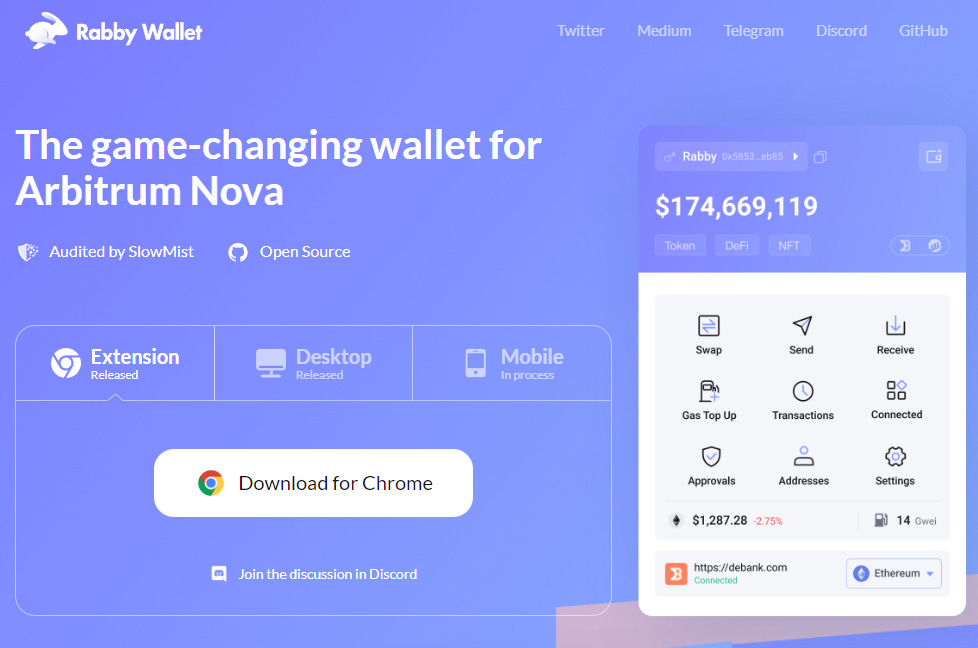
Okay—so if you’re looking for something that balances modern UX, solid multi-chain support, and sensible security defaults, check out this extension I use and recommend: https://sites.google.com/cryptowalletextensionus.com/rabby-wallet-download/. I’m not shilling for anything shady here; I’m pointing to a tool that, in my experience, ships smart defaults like clear transaction detail, allowance management, and hardware support. I’ve set up accounts there in NYC coffee shops and in airports, and it handled both noisy public Wi-Fi and stricter home networks without weird failures.
Note: you should still practice basic hygiene. Use separate browser profiles for high-value accounts. Disable automatic connections. Keep one ‘hot’ account for small daily action and one ‘cold’ account (hardware-protected) for larger holdings. It’s simple, but it reduces risk a lot.
On usability—this wallet nails common flows like token swaps and NFT approvals while keeping advanced features tucked away. Good. It doesn’t overwhelm newbies, but it gives power users what they need. That matters in the US and beyond, because DeFi is global but attention spans are not.
Common mistakes users make (and how to avoid them)
Approve-all tokens. Bad move. Suddenly you’ve signed a lifetime pass for a contract. Check allowances. Revoke often. Also, ignoring RPC warnings. If a network seems to show implausible gas prices or failed blocks, pause. Sometimes it’s just a flaky node, but sometimes it’s a malicious RPC return that’s trying to trick you.
Another mistake: treating browser wallets like banks. They aren’t. No FDIC. No customer support to reverse an accidental transfer. Double-check addresses. Copy-paste carefully. Use address book features if the wallet has them. Sounds obvious, but people rush, and that’s how money walks away.
Finally, too many people keep all their funds in one browser profile. I do not do that anymore. Splitting accounts across profiles and using a hardware wallet for big sums is a small friction that pays off when something goes sideways. Trust me. I’ve seen good people lose money to phishing pages that looked identical to legit dApps. Sad but true.
FAQ
Is a browser extension wallet safe enough for DeFi?
Short answer: Yes, for everyday use with precautions. Long answer: If you follow basic best practices—segregate accounts, use hardware for large holdings, and only connect to trusted sites—browser extension wallets are practical and secure enough for most DeFi activity.
How should I store my seed phrase?
Write it down on physical media and store it somewhere safe. Consider using an encrypted backup if you’re tech-savvy, but avoid cloud storage for raw seed phrases. I’m not 100% sure about the “best” single method—everyone’s threat model differs—so weigh convenience versus absolute security.
What’s the easiest way to spot a malicious dApp?
Look for weird domain names, mismatched branding, and unexpected permission prompts. If a site asks to sign a message out of context, pause. Use your instincts—if somethin’ feels off, it probably is. And double-check contract addresses on reputable explorers before approving anything.